
Wine and Health
Why We Created This Resource
Providing clear, evidence-based information about wine and health has been an important goal for Women For WineSense. During her presidency, Immediate Past President Amy Gross championed the effort to address wine and health misinformation and encourage more informed conversations around this important topic.
At the Women For WineSense National Grand Event, Dr. Edward J. Miller shared his expertise through a Wine & Health presentation that sparked meaningful conversations and many questions from our members. As National President Natalie Travis and National Director of Education Tessa Butterfield stepped into their roles, they recognized the importance of continuing this conversation and expanding access to evidence-based information. Together with Dr. Miller, they saw an opportunity to dive deeper into the research and create a resource that would provide members and wine professionals with clear, accurate, and balanced information about wine and health.
Through this educational series, Dr. Miller and Tessa explore the science behind today’s most common wine and health questions—separating research from headlines and helping readers better understand the facts behind the statistics.

Dr. Edward J Miller is a retired board-certified obstetrician-gynecologist and former hospital Chief Medical Officer. Over a four-decade medical career, he served as a clinician, surgeon, educator, researcher, and hospital executive, including roles as Chief of Staff and OB-GYN department chair at major medical centers.
He is a member of the Renaud Society, an international group of medical professionals and researchers studying wine and health, and a regular attendee at International Wine & Heart Health Summits. He has delivered evidence-based lectures on wine and health to both professional and public audiences for more than 15 years.
He and his wife, also a physician, live in Tucson, Arizona, where he continues to advocate for informed, balanced conversations about lifestyle, longevity, and quality of life.
In collaboration with Women For WineSense, Dr. Miller shares his expertise by addressing today’s most frequently asked questions about wine and health. His evidence-based approach helps readers understand the science, challenge common misconceptions, and make informed decisions based on research rather than headlines.

Tessa Butterfield is the National Director of Education for Women For WineSense.
As National Director of Education for Women For WineSense, Tessa Butterfield is passionate about making wine education approachable, relevant, and rooted in credible information. After hearing Dr. Edward J. Miller’s Wine & Health presentation at the National Grand Event and listening to the questions and conversations that followed, Tessa recognized members’ desire to learn more. Working with Dr. Miller, they developed this educational series to explore the research behind those questions and provide balanced, science-based answers that benefit both wine enthusiasts and wine professionals.
WINE & HEALTH
FAQs

-
No—having a single glass of wine does not mean you will develop cancer. Cancer risk isn’t that immediate or all-or-nothing.
This is one of the most common questions people ask when discussing alcohol and health, and the answer is more complex than many headlines suggest.
That said, science shows two important things:
- Alcohol is a known carcinogen, and risk increases with the amount consumed over time.
- Even small amounts (like one drink per day) are associated with a slight increase in risk, particularly for breast cancer in women
In other words, the relationship between alcohol and cancer is generally viewed as cumulative rather than tied to any single occasion or drink.
Putting the risk in perspective
Research involving over 150,000 women across 53 studies found that each additional drink per day is associated with a 7.1% relative increase in breast cancer risk (Hamajima et al., Br J Cancer, 2002). In absolute terms, a non-drinking woman has an 11% baseline lifetime risk, one drink per day raises that to approximately 12%; two drinks to about 13%.
So alcohol doesn’t create risk out of nowhere—it adds a small increment to an existing baseline risk.
This distinction between relative risk and absolute risk is important, because the two can sound very different when presented without context.
For many people, understanding the actual size of the risk change helps create a more balanced and informed perspective.
Bottom line
- A single glass of wine does not “cause” cancer on its own
- But any regular alcohol intake slightly increases risk, and the effect is dose-dependent—more over time means more risk
The scientific evidence points to a gradual increase in risk rather than a sharp threshold where alcohol suddenly becomes dangerous.
These are individual trade-offs each woman can weigh for herself. The key is to view alcohol through the lens of informed moderation—understanding that it operates on a risk spectrum, not a yes/no switch.
Personal factors—like family history, overall health, and lifestyle—matter. The goal isn’t perfection; it’s making choices that align with your values and your understanding of the trade-offs.
Ultimately, informed decisions are often better than fear-based ones. Understanding both the potential risks and the broader context allows each person to make choices that fit their own health priorities and lifestyle.
Note
This FAQ cites only peer-reviewed studies; we do not rely on advisory body opinions, which often reflect policy considerations beyond the science. As with any health-related decision, individual risk factors, medical history, and personal preferences should be considered when interpreting the research.
-
The amount of sugar in wine depends largely on the style of wine you’re drinking. Some wines contain very little residual sugar, while others are noticeably sweeter.
Many people are surprised to learn that not all wines contain the same amount of sugar. In fact, the difference between a dry wine and a dessert wine can be substantial.
Dry wines — such as Cabernet Sauvignon, Merlot, Chardonnay, or Sauvignon Blanc — typically contain less than 1 gram of sugar per 5-ounce glass (about 4 calories from sugar). During fermentation, most of the natural grape sugar is converted into alcohol. This is why many of these wines taste dry rather than sweet, even though they are made from naturally sweet grapes.
Sweeter wines — such as Moscato, many Rieslings, Port, late-harvest wines, and dessert wines — can contain 10–20 grams of sugar or more per glass, depending on the style and sweetness level. The winemaking process often leaves more natural grape sugar behind in these wines, which contributes to their richer, sweeter character.
If you’re trying to limit sugar intake, dry wines are generally the better choice. Sweeter wines can be enjoyed too — just keep in mind they contain more residual sugar and calories, more like a dessert.
For most wine drinkers, understanding the difference between dry and sweet styles can make it much easier to choose a wine that aligns with their taste preferences and nutritional goals.
Note
This FAQ cites only peer-reviewed studies; we do not rely on advisory body opinions, which often reflect policy considerations beyond the science. As with any health-related decision, individual risk factors, medical history, and personal preferences should be considered when interpreting the research.
-
Not all red wines are created equal when it comes to heart health. Oligomeric Procyanidins (OPCs), powerful antioxidants found in grape seeds and skins, offer more arterial protection than the often-overhyped resveratrol.
Top High-OPC Wine Grapes & Styles
Grape/Wine
Region
Why High in OPCs
Tannat
Madiran (SW France), Uruguay
Very high seed tannins;
Sagrantino
Montefalco, Umbria, Italy
Extremely tannic; rich in OPCs
Cabernet Sauvignon
Bordeaux, Napa, Chile
Thick skins; long maceration common
Petit Verdot
Malbec
Bordeaux, California
Bordeaux, Argentina
Dark, tannic; often blended
Thick skins; Growing conditions
Aglianico
Taurasi, Southern Italy
Structured, late-ripening grape
Nebbiolo
Barolo, Barbaresco (Italy)
Long maceration and aging
Syrah/Shiraz
Northern Rhône, Australia
Moderate to high tannins
Monastrell (Mourvèdre)
Spain, Southern France
Intense, earthy; long maceration
Saperavi
Republic of Georgia
Red-fleshed grape rich in polyphenols
Note
This FAQ cites only peer-reviewed studies; we do not rely on advisory body opinions, which often reflect policy considerations beyond the science. As with any health-related decision, individual risk factors, medical history, and personal preferences should be considered when interpreting the research.
-
Why This Question Matters
Cardiovascular disease (CVD) is, by far, the leading cause of death in the United States.
So, if something meaningfully reduces cardiovascular risk, it is logical that it could translate into measurable gains in overall survival.At a population level, a 20–25% reduction in heart disease risk—seen in many studies—could correspond to approximately 60,000–80,000 fewer deaths annually among light-to-moderate drinkers, out of roughly 700,000 CVD deaths per year.
This topic matters because it continues to generate interest among both researchers and consumers. The question is not whether excessive drinking is harmful—it is whether moderate consumption may fit differently into the health picture.
Short Answer
Moderate wine consumption, especially with meals—is associated with lower risk of heart disease and may contribute to modest increases in longevity. More is not better.
In other words, the potential benefits appear to come from moderation, not from increasing alcohol intake.
What Does the Best Science Show?
- Lower Risk of Heart Disease
Large meta-analyses show ~20–25% lower risk of coronary heart disease among light-to-moderate drinkers.
(Ronksley et al., BMJ 2011; Costanzo et al., Eur J Epidemiol 2010) - The “J-Shaped Curve”
Lowest risk occurs in light-to-moderate drinkers, with elevated risk in heavy drinkers.
(Di Castelnuovo et al., Arch Intern Med 2006) - Longevity
Evidence suggests a modest association with lower overall mortality, though the effect is smaller and remains debated.
(Zhao et al., JAMA Network Open 2023)
Researchers continue to study this area, as lifestyle and health differences between drinkers and non-drinkers can be difficult to fully account for.
Biological Plausibility
There are well-described mechanisms that support these observations:
- Low-dose alcohol:
- Increases HDL (“good”) cholesterol
- Improves insulin sensitivity
- Reduces blood clots (which cause heart attacks)
- Red wine polyphenols may:
- Improve blood vessel function
- Reduce vascular inflammation
- Inhibit LDL oxidation, a key step in plaque formation
(de Gaetano & Costanzo, Nutr Metab Cardiovasc Dis 2015)
Together, these mechanisms provide a biologically reasonable explanation for the associations observed in population studies.
Lifestyle Context Matters
Benefits are most evident when wine is:
- Consumed with meals
- Spread evenly over time (not binge drinking)
- Part of an overall healthy lifestyle
(Tresserra-Rimbau et al., Am J Clin Nutr 2014)
This is an important point: wine is not a substitute for healthy habits. Diet, exercise, sleep, and smoking status have a much larger impact on long-term health outcomes.
What Counts as Moderate?
- Women: up to 1 drink/day
- Men: up to 1–2 drinks/day
Standard drink sizes matter, as pours served at restaurants or social gatherings are often larger than a single standard drink.
- Beer: 12 ounces (at 5% ABV)
- Malt Liquor: 8 ounces (at 7% ABV)
- Table Wine: 5 ounces (at 12% ABV)
- Distilled Spirits: 1.5 ounces of 80-proof liquor (40% ABV, like vodka, rum, or whiskey)
Putting Risk in Context
Moderate drinking is associated with:
- Reduced cardiovascular mortality
- A small increase in certain cancers
For women specifically, see our FAQ on alcohol and breast cancer risk.
This creates a net-effect discussion, not a simple “good vs. bad” conclusion.
Understanding both the potential benefits and risks is more helpful than viewing alcohol through an all-or-nothing lens.
Bottom Line
Moderate wine consumption is associated with improved cardiovascular health and may contribute to modest longevity benefits, largely through its impact on heart disease. The strongest evidence supports moderation, consistency, and consumption as part of a broader healthy lifestyle rather than as a health intervention on its own.
Note
This FAQ cites only peer-reviewed studies; we do not rely on advisory body opinions, which often reflect policy considerations beyond the science. As with any health-related decision, individual risk factors, medical history, and personal preferences should be considered when interpreting the research.
- Lower Risk of Heart Disease
-
This is a question we get asked often, especially by people trying to make healthier choices.
Yes, wine contains both carbohydrates and calories—but most of the calories actually come from the alcohol, not the sugar. This usually surprises a lot of people. Many assume sugar is the biggest source of calories in wine, but that’s not usually the case.
In a typical 5-ounce glass of wine, you’ll get about 110–130 calories if it’s a dry wine. Sweeter wines contain more calories because they retain more residual sugar. For example, a 5-ounce glass of a sweet wine such as Moscato may contain 140–160 calories, while a 5-ounce serving of Port can contain 180–230 calories, depending on its sweetness and alcohol content.
The alcohol (ethanol) in wine provides about 7 calories per gram, and in a dry wine it typically accounts for 85–90% of the total calories in the glass. The remainder comes from residual sugar (carbohydrates), which is present in greater amounts in sweeter wines.
In other words, alcohol itself is dense in calories – even when there’s very little sugar left in the wine.
For example, if you’re drinking a 5-ounce glass of wine containing 13% alcohol, most of the roughly 120 calories come from the alcohol—not the sugar.
So while wine does contain carbohydrates, especially if it’s sweet, the primary contributor to calories is usually the alcohol itself. If you’re counting calories, choosing a dry wine with lower alcohol content is generally the lighter option.
The takeaway? If your goal is to reduce carbohydrates, look for dry wines. If your goal is to reduce calories, pay attention to both sweetness and alcohol percentage.
Note
This FAQ cites only peer-reviewed studies; we do not rely on advisory body opinions, which often reflect policy considerations beyond the science. As with any health-related decision, individual risk factors, medical history, and personal preferences should be considered when interpreting the research.
-
This is a very common health question that we receive about wine – and it’s one of the most misunderstood.
There has been increasing attention on whether wine consumption raises the risk of breast cancer. When the research focuses specifically on wine, rather than alcohol in general, the picture is less alarming than headlines suggest.
What Wine-Specific Research Shows
One important point is that not all studies ask the same question. Some evaluate alcohol as a whole, while others look specifically at wine.
Earlier studies often grouped all alcoholic beverages together. More recent research has examined wine alone:
- A 2023 systematic review found little to no association between wine consumption and breast cancer risk.
- A 2025 meta-analysis comparing red and white wine found:
- Perhaps a small increase in skin cancer risk with white wine
- No statistically significant association with red wine
Taken together, wine—particularly red wine—does not stand out as a major breast cancer risk factor in these analyses.
That doesn’t mean there is zero risk – it means the evidence for wine specifically is more nuanced than many headlines suggest.
How Much Wine Are We Talking About?
The amount consumed matters. Most of the available research is based on light to moderate drinking – not heavy drinking.
Light to moderate wine consumption generally means:
- About 1 glass of wine per day
This is the range most often examined in wine-specific studies.
Putting Risk in Perspective
When discussing health risks, it is important to look at absolute risk, not just percentages. That helps us understand what the numbers mean in everyday life.
In the United States, about 131 out of every 100,000 women are diagnosed with breast cancer each year.
To put wine in context:
- Wine-specific studies suggest that, at low to moderate intake, any change in breast cancer risk, if present at all, is modest.
- Obesity, by comparison, is associated with a 20–40% higher risk of postmenopausal breast cancer, translating to 30–40 additional cases per 100,000 women per year—a substantially larger effect than that attributed to moderate wine consumption.
- Body weight, physical activity, reproductive history, genetics, and hormone exposure are all larger determinants of breast-cancer risk than low-level alcohol intake, but alcohol is a recognized modifiable risk factor.
That doesn’t make alcohol irrelevant – it simply helps its contribution alongside other, often more influential, risk factors.
The Take-Home Message
Alcohol is associated with a small, dose-related increase in breast cancer risk. However, wine-specific studies—especially those examining red wine—have been less consistent and generally less alarming than analyses that combine all alcoholic beverages, although they do not prove that wine is risk-free.
For low-to-moderate wine consumers, the absolute increase in risk, if present at all, appears to be modest and substantially smaller than that associated with well-established risk factors such as obesity and physical inactivity. As with any health decision, any potential effect of moderate wine consumption should be considered within the broader context of an individual’s overall breast cancer risk profile.
The goal isn’t to dismiss the evidence or exaggerate it – it’s to understand what the science says. Looking at the totality of the research provides a much clearer picture than relying on a single headline or study.
📚 References
- Bagnardi V, et al. Alcohol consumption and breast cancer risk: A meta-analysis. Asian Pacific Journal of Cancer Prevention. 2016;17(7):3249–3261.
- Li Y, et al. Wine consumption and cancer risk: A systematic review and meta-analysis. Frontiers in Nutrition. 2023;10:1197745. doi:10.3389/fnut.2023.1197745
- Zhao J, et al. Red versus white wine consumption and cancer risk: A systematic review and meta-analysis. Nutrients. 2025;17(3):534. doi:10.3390/nu17030534
- National Cancer Institute (NCI). SEER Cancer Statistics Review, Breast Cancer Incidence (latest available data).
- World Cancer Research Fund / American Institute for Cancer Research. Diet, Nutrition, Physical Activity and Breast Cancer. Continuous Update Project Report, 2020.
- American Cancer Society. Breast Cancer Facts & Figures 2023–2024.
Note
This FAQ cites only peer-reviewed studies; we do not rely on advisory body opinions, which often reflect policy considerations beyond the science. As with any health-related decision, individual risk factors, medical history, and personal preferences should be considered when interpreting the research.
-
If you’ve ever said, “I can drink white wine just fine, but red wine gives me a headache,” you’re definitely not alone. It’s one of the most common wine questions out there.
Red wine headaches don’t have a single proven cause, but research points to a mix of individual biology and natural wine compounds. Scientists have ruled out several myths while highlighting a few leading suspects.
Sulfites are often blamed, but they’re found in all wines—and usually in higher amounts in white wine. They also appear in dried fruits and processed foods at much higher levels. True sulfite sensitivity is uncommon and typically causes breathing issues, not headaches. For most people, sulfites aren’t the culprit.
This is probably the biggest misconception about wine. Sulfites often get the blame, but evidence simply doesn’t support them as the cause of headaches for most people.
Histamine is another possibility. Red wine contains more histamine, which can dilate blood vessels and trigger headaches in people who do not break it down efficiently. Alcohol also slows the enzyme that metabolizes histamine. Still, studies show inconsistent results, suggesting histamine affects only certain individuals. In other words, two people can drink the exact same wine and have completely different experiences.
A newer theory centers on quercetin, an antioxidant concentrated in grape skins and therefore abundant in red wine. Research from 2023 indicates that after drinking alcohol, a quercetin metabolite may interfere with aldehyde dehydrogenase, the enzyme that clears acetaldehyde—a toxic byproduct of alcohol metabolism. Acetaldehyde buildup can cause inflammation, flushing, nausea, and headache. This mechanism may explain why some people react even to small amounts of red wine, though more human studies are needed.
If you’re prone to these headaches, practical strategies may help: drink slowly, stay hydrated, avoid drinking on an empty stomach, consider an antihistamine beforehand, and track which wines bother you. Many people tolerate lighter reds—Pinot Noir, Gamay, Frappato, Zweigelt, Dolcetto—better than heavier, oak‑aged styles.
A simple wine journal can also help you identify patterns. You may find that it’s a specific style or producer – not red wine as a whole – that triggers your symptoms.
Overall, red wine headaches seem to stem from a combination of personal sensitivity and compounds like quercetin and histamine, with sulfites largely ruled out.
The bottom line? There probably isn’t one single explanation. Like many things in nutrition and health, the answer depends on the individual.
Note
This FAQ cites only peer-reviewed studies; we do not rely on advisory body opinions, which often reflect policy considerations beyond the science. As with any health-related decision, individual risk factors, medical history, and personal preferences should be considered when interpreting the research.
-
Yes—but it depends largely on how much you drink. This is a great example of where the amount consumed matters just as much as the beverage itself.
Research shows that light to moderate wine consumption (about one 5-ounce glass per day for women and up to two for men) generally has little effect on long-term blood pressure in healthy adults. Although red wine contains polyphenols that may improve blood vessel function, studies have not consistently shown that drinking red wine lowers blood pressure.
The picture changes with heavier drinking. Consuming about three or more alcoholic drinks per day—or drinking large amounts in a single sitting—is consistently associated with higher blood pressure. Alcohol can raise blood pressure by stimulating the nervous system, increasing stress hormones such as adrenaline, and interfering with the normal ability of blood vessels to relax. Over time, chronic heavy drinking can lead to persistent hypertension.
This is one of the areas where the scientific evidence is very consistent: heavy alcohol consumption and high blood pressure are clearly linked.
The good news is that this effect is often reversible. Studies show that people with high blood pressure who reduce heavy alcohol consumption frequently experience meaningful reductions in their blood pressure.
If you have high blood pressure, the best approach is to drink in moderation, avoid binge drinking, and discuss your alcohol intake with your healthcare provider. Lifestyle measures such as maintaining a healthy weight, exercising regularly, limiting sodium, and following a heart-healthy diet have a much greater impact on blood pressure than the choice of alcoholic beverage.
The bottom line? For most healthy adults, moderation is the key. Your overall lifestyle has a far greater influence on blood pressure than if you occasionally enjoy a glass of wine.
Note
This FAQ cites only peer-reviewed studies; we do not rely on advisory body opinions, which often reflect policy considerations beyond the science. As with any health-related decision, individual risk factors, medical history, and personal preferences should be considered when interpreting the research.
-
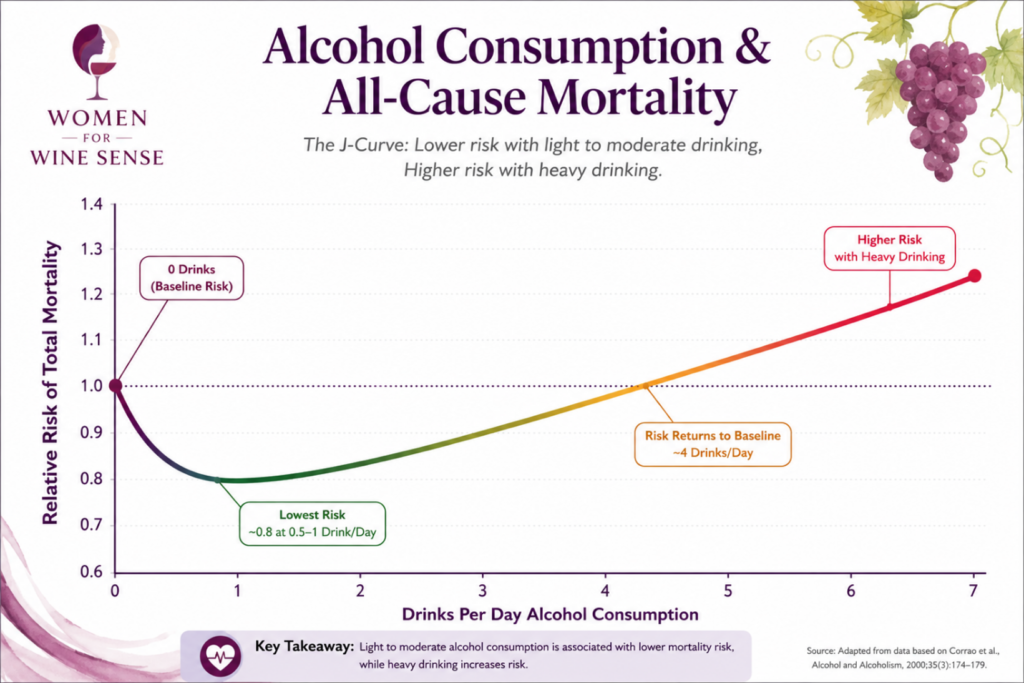
The “J-shaped curve” describes the relationship between alcohol consumption and heart disease risk. Compared with people who drink heavily, light to moderate wine drinkers tend to have lower risk of cardiovascular disease. Interestingly, many observational studies have also found a slightly lower risk than in abstainers, creating a “J” shape when risk is graphed. However, as alcohol intake increases beyond moderate levels, the protective association disappears and the risk of heart disease, stroke, high blood pressure, and other health problems rises sharply. In short, more is not better – any potential cardiovascular benefit has only been observed with light-to-moderate consumption and does not justify starting to drink for health reasons.
Critics are right that some early alcohol studies were weakened by “sick-quitter” bias—placing former drinkers who stopped because of illness into the nondrinker group. But the J-shaped association has not depended solely on that flaw. It has been observed across many decades, countries, cohorts, and endpoints, and studies that specifically separate former drinkers from lifetime abstainers still find lower coronary heart disease risk among light-to-moderate drinkers. Ronksley’s BMJ meta-analysis found light-to-moderate drinking associated with reduced risk of several cardiovascular outcomes, while Roerecke and Rehm emphasized that the reference group should be lifetime abstainers precisely because of sick-quitter bias—and still found cardioprotective associations when drinking was light-to-moderate and not accompanied by heavy episodic drinking.
The biological plausibility is also unusually strong for an observational nutrition finding: randomized/interventional alcohol-feeding studies show favorable changes in HDL cholesterol, apolipoprotein A1, adiponectin, and fibrinogen—mechanisms directly relevant to atherosclerosis and thrombosis.
So the fair conclusion is not “alcohol is good for everyone” or “people should start drinking.” It is: the cardiovascular J-curve is too consistent, too biologically plausible, and too repeatedly observed after better abstainer definitions to dismiss as merely sick-quitter bias. The remaining debate is about causality, net health effects, cancer risk, drinking pattern, age, sex, and individual risk—not whether the entire signal was created by former drinkers being misclassified.
References: Ronksley et al., BMJ (2011), Roerecke & Rehm, American Journal of Epidemiology (2011), Roerecke & Rehm, BMC Medicine (2014), Brien et al., BMJ (2011)
Note
This FAQ cites only peer-reviewed studies; we do not rely on advisory body opinions, which often reflect policy considerations beyond the science. As with any health-related decision, individual risk factors, medical history, and personal preferences should be considered when interpreting the research.
-
As non-alcoholic wines continue to improve in quality, this is a question we’re hearing more and more often.
Short answer: Possibly yes. Longer answer: The science has some interesting plot twists.
The case for wine—with an asterisk
For years, researchers have noticed that moderate wine drinkers often appear healthier than expected. The challenge has been figuring out why.
Observational studies have long found that light-to-moderate wine drinkers tend to have lower rates of cardiovascular disease and death than both nondrinkers and heavy drinkers. One clever recent study went beyond self-reported “How much wine do you drink?” surveys—which can be notoriously unreliable—and instead measured urinary tartaric acid, a biomarker of actual wine consumption. The result: Light-to-moderate wine consumption was associated with fewer cardiovascular events in older adults at high cardiovascular risk following a Mediterranean diet.¹,²Using a biological marker instead of a questionnaire gives researchers greater confidence that they’re measuring actual wine intake.
But here’s the asterisk: Association doesn’t prove causation. Moderate wine drinkers may also exercise more, eat healthier diets, have stronger social connections, or differ from nondrinkers in other important ways. Wine may be riding on the coattails of a generally healthier lifestyle rather than driving the benefit itself.³ That’s one of the biggest challenges in nutrition research – healthy habits often come as a package rather than one isolated behavior.
The plot twist: Could dealcoholized wine be better?
Here’s where the story takes an unexpected turn.
In a small randomized crossover trial, 67 men at high cardiovascular risk drank regular red wine, dealcoholized red wine, and gin during separate four-week periods. The dealcoholized wine lowered systolic blood pressure by about 6 mmHg and diastolic pressure by about 2 mmHg. It also increased nitric oxide, a molecule that helps blood vessels relax and improves blood flow. Regular red wine did not produce the same blood-pressure benefit.⁴
Other small studies suggest that alcohol-free red-wine polyphenols may reduce oxidative stress—the cellular wear and tear that occurs when free radicals overwhelm the body’s antioxidant defenses—and improve some cardiovascular risk markers.⁵
These results suggest that some of wine’s potentially beneficial compounds may still work even after the alcohol is removed.
The important caveat
As exciting as these studies are, it’s important not to overinterpret them. No study of either alcoholic or non-alcoholic wine has proved that drinking it prevents heart attacks, strokes, or death. Improvements in blood pressure and other biomarkers are encouraging, but they are not the same as demonstrating fewer actual cardiovascular events. Researchers still need larger, long-term clinical trials before drawing firm conclusions.
The takeaway
Non-alcoholic wine appears to retain many of the grape’s beneficial polyphenols while avoiding most of the risks associated with heavier consumption of alcohol, including higher blood pressure, increased cancer risk, liver disease, and sleep disruption. If you’re choosing between a glass of regular wine and a low-sugar non-alcoholic one, the alcohol-free pick looks like a smart bet.
If you enjoy the flavor and experience of wine but want to avoid alcohol, today’s non-alcoholic wines may offer an appealing middle ground. While the science is still evolving, they appear to preserve many of the grape’s natural components without the health risks that come with alcohol itself.
References
- Lucerón-Lucas-Torres M, et al. Association Between Wine Consumption and Cardiovascular Disease: A Systematic Review and Meta-Analysis. 2023.
- Domínguez-López I, et al. Urinary Tartaric Acid as a Biomarker of Wine Consumption and Cardiovascular Risk in the PREDIMED Trial. European Heart Journal. 2025.
- Piano MR, et al. Alcohol Use and Cardiovascular Disease: A Scientific Statement From the American Heart Association. 2025.
- Chiva-Blanch G, et al. Dealcoholized Red Wine Decreases Systolic and Diastolic Blood Pressure and Increases Plasma Nitric Oxide. Circulation Research. 2012.
- Caccetta RAA, et al. Red Wine Polyphenols, in the Absence of Alcohol, Reduce Lipid Peroxidative Stress in Smoking Subjects. Free Radical Biology and Medicine. 2001.
Note
This FAQ cites only peer-reviewed studies; we do not rely on advisory body opinions, which often reflect policy considerations beyond the science. As with any health-related decision, individual risk factors, medical history, and personal preferences should be considered when interpreting the research.
- Lucerón-Lucas-Torres M, et al. Association Between Wine Consumption and Cardiovascular Disease: A Systematic Review and Meta-Analysis. 2023.
-
This is a question we hear more and more, especially as shoppers become more interested in what’s in their food (and beverages).
The short answer: Neither organic nor natural wine has been proven healthier. The principal health consideration remains the amount of alcohol consumed.
What’s the difference?
Before we talk about health, it helps to understand that “organic” and “natural” don’t necessarily mean the same thing.
Conventional wine: Grapes may be grown using approved synthetic pesticides and fertilizers. Winemakers can use permitted additives, cultured yeast, filtration, and other techniques to improve clarity, stability, and consistency.
Organic wine: Grapes are grown without most synthetic pesticides or fertilizers. In the United States, wine labeled “organic” cannot contain added sulfites, while wine “made with organic grapes” may contain limited added sulfur dioxide (total sulfites ≤ 100 ppm).
Natural wine: This is not a consistently regulated term. It usually describes organically (or biodynamically) farmed grapes, native-yeast fermentation, minimal or no additives, little or no added sulfur, and limited filtration. France has a voluntary “Vin Méthode Nature” charter; elsewhere the term is largely informal.
So a wine can be organic without being “natural,” and a wine described as natural isn’t necessarily certified organic. That’s an important distinction when you’re reading the label.
Is one healthier?
Organic wines generally contain fewer synthetic pesticide residues, but residue levels in all finished wine sold in the U.S. are typically infinitesimal and well below thresholds of concern. There is no convincing evidence that this produces a meaningful health benefit for the drinker.
All wine naturally contains some sulfites (produced by yeast during fermentation). Lower-sulfite or no-added-sulfite wines may help the small number of people—particularly some asthmatics—who are sulfite-sensitive. Sulfites are not usually responsible for wine headaches; other compounds (quercetin, histamines, tannins, alcohol itself, etc.) are more commonly implicated.
And this is another place where wine has picked up a bit of a reputation that the science doesn’t completely support.
Alcohol is the overriding health factor. Organic, natural, and conventional wines usually contain similar amounts of alcohol. None avoids alcohol’s risks, including an increased risk of several cancers. Drinking less matters far more than how the wine was produced.
That’s really the key takeaway: changing the way a wine is made doesn’t remove the effects of alcohol.
Flavor, clarity, and consistency
Organic wines: Can taste exactly like conventional wines. Organic certification describes farming and production practices—not a particular flavor profile. You may not be able to tell the difference simply by tasting the wine.
Natural wines: Are often less filtered and may appear cloudy or contain sediment. Flavors can be fresh, earthy, tart, yeasty, or “funky.” Some are expressive and distinctive; others may show unwanted microbial or oxidative faults. Minimal sulfur can also make them less stable after opening. The unpredictability is part of the appeal for some people – and part of the challenge for others.
Conventional wines: Are generally clearer, more stable, and more consistent from bottle to bottle because winemakers have more tools to control fermentation, prevent spoilage, and preserve flavor. There’s nothing inherently wrong with those winemaking tools. They’re often what allow a winemaker to deliver the same style and quality year after year.
Filtration does not make wine less healthy, and cloudiness is not evidence that a wine is more nutritious or authentic. Clear doesn’t mean less natural, and cloudy doesn’t automatically mean better.
Verdict
Choose organic wine to support organic farming and reduce synthetic pesticide exposure in the vineyard. Choose natural wine if you enjoy minimal-intervention winemaking and less predictable flavors. But neither has been proven healthier than conventional wine for the consumer.
For health, the most important distinction is not organic versus conventional—it is less alcohol versus more alcohol. If health is your primary consideration, don’t feel like you have to find a special label. The biggest difference you can make is simply being thoughtful about how much and how often you drink.
Sources: U.S. Alcohol and Tobacco Tax and Trade Bureau (sulfite and organic-wine labeling guidance); USDA National Organic Program; International Organisation of Vine and Wine (OIV) materials on production practices; National Cancer Institute, Alcohol and Cancer Risk Fact Sheet; expert commentary from UC Davis wine scientists and clinical sources on sulfite sensitivity.
Note
This FAQ cites only peer-reviewed studies; we do not rely on advisory body opinions, which often reflect policy considerations beyond the science. As with any health-related decision, individual risk factors, medical history, and personal preferences should be considered when interpreting the research.
-
This is one of those questions where there isn’t a simple winner.
Short answer: Possibly—but how much and how often you drink probably matters more than whether you choose wine or beer.
A 5-ounce glass of 12% wine and a 12-ounce 5% beer each contain approximately 14 grams of alcohol. Actual servings can contain considerably more: a 6-ounce glass of 14.5% wine equals about 1½ standard drinks, while a 16-ounce 7% craft beer approaches two.
That’s why it’s important to pay attention to serving size, not just what’s in the glass.
Where wine may have an advantage
Wine—especially red wine—contains more polyphenols, including anthocyanins, quercetin and procyanidins. Beer also contains polyphenols from barley and hops, but generally in smaller amounts.
These naturally occurring compounds are one reason red wine has received so much attention in nutrition research over the years.
Observational studies have frequently associated moderate wine consumption with lower cardiovascular and all-cause mortality. Beer sometimes demonstrates a similar, although generally less consistent, relationship. These studies cannot completely separate the beverage from lifestyle: wine drinkers may differ from beer drinkers in diet, exercise, smoking, socioeconomic status and the likelihood of drinking with meals.¹
In other words, researchers can’t always tell whether the observed benefits come from the wine itself, the lifestyle of the people drinking it, or a combination of both.
Dry wine also typically contains fewer carbohydrates and slightly fewer calories than regular beer:
Typical serving
Calories
Carbohydrates
5 oz dry wine
120–130
3–5 g
12 oz regular beer
140–160
10–15 g
12 oz light beer
90–110
3–7 g
If you’re watching carbohydrates, dry wine generally has an advantage over regular beer, while light beer can be a lower-calorie option.
What about wine & cancer?
This is another area where it’s important to separate headlines from the actual research.
A 2023 systematic review and meta-analysis of 73 studies found no significant association between wine consumption and overall, colorectal, renal or female cancers. Its breast-cancer estimate showed no increase.²
A 2025 meta-analysis of 42 observational studies likewise found no increase in overall cancer risk from either red or white wine. In its site-specific analysis of 36,917 breast-cancer cases, however, white wine was associated with a statistically significant 12% increase in breast-cancer risk while red wine showed a mild trend toward increased risk which was not statistically significant. White wine, but not red wine, was also associated with a 22% increase in skin-cancer risk.³
As with many nutrition studies, these findings describe associations rather than proving that wine directly causes or prevents disease.
Beer has not been established as a safer alternative.⁵
The bottom line
- Wine—particularly red wine—provides more polyphenols and fewer carbohydrates than regular beer.
- Light beer may contain fewer calories than wine.
- Moderate wine consumption is more consistently associated with favorable cardiovascular and longevity outcomes.
- Recent meta-analyses (pooling multiple studies into one) found no significant increase in overall cancer risk from wine, but breast-cancer findings remain mixed.
- White wine showed statistically significant associations with breast and skin cancer in the 2025 analysis; red wine did not.
- Serving size, alcohol concentration, frequency and drinking pattern may matter more than the choice between wine and beer.
The biggest takeway? There isn’t a universally “healthy” alcoholic beverage. If you choose to drink, the evidence suggests that moderation, portion size, and your overall lifestyle have a much greater impact on health than whether you choose a glass of wine or a pint of beer.
References
- Costanzo et al. Wine, beer or spirit drinking in relation to fatal and nonfatal cardiovascular events: a meta-analysis. European Journal of Epidemiology. 2011.
- Lucerón-Lucas-Torres et al. Association between wine consumption and cancer: a systematic review and meta-analysis. Frontiers in Nutrition. 2023.
- Lim et al. Consumption of Red Versus White Wine and Cancer Risk: A Meta-Analysis of Observational Studies. 2025.
- Sun et al. Alcohol Consumption by Beverage Type and Risk of Breast Cancer: A Dose-Response Meta-Analysis of Prospective Cohort Studies. Alcohol and Alcoholism. 2020.
- Jung et al. Alcohol consumption and breast cancer risk by estrogen receptor status: in a pooled analysis of 20 studies. International Journal of Epidemiology. 2016.
Note
This FAQ cites only peer-reviewed studies; we do not rely on advisory body opinions, which often reflect policy considerations beyond the science. As with any health-related decision, individual risk factors, medical history, and personal preferences should be considered when interpreting the research.
-
If you’ve ever heard someone say, “I drink red wine because of the antioxidants,” this is probably what they’re talking about.
Wine is probably the most chemically complex beverage we consume. You’ve probably heard that red wine is “good for your heart”—and that resveratrol is the reason why. It deserves the attention, but it’s only one of over 500 naturally occurring compounds scientists have identified in wine, from tannins and anthocyanins to hundreds of plant polyphenols. If wine truly offers health benefits, researchers now think it’s likely the combined effect of many compounds working together—not one “magic ingredient.” In other words, wine is much more than just resveratrol.
🧬 Resveratrol: The Celebrity Antioxidant
Resveratrol gets most of the headlines – and for good reason. It was one of the first wine compounds to generate widespread scientific interest.
Resveratrol lives mainly in grape skins, so red wine (fermented with the skins) contains far more than white. Early animal studies around the turn of the century were thrilling—resveratrol seemed to favorably influence inflammation, cancer, aging, and cardiovascular health.
Then came the reality check: those mice received doses equivalent to a human drinking 500 to 700 bottles of red wine a day. Women for WineSense can’t recommend that!
It’s a great reminder that laboratory studies don’t always translate into real life.
A comprehensive 2024 review of nearly 200 human studies found encouraging hints for inflammation and metabolic health, but concluded there’s still not enough evidence to recommend resveratrol for preventing or treating disease. So, resveratrol is fascinating—but probably isn’t the whole story behind wine’s reputation.
🍇 OPCs: Wine’s Unsung Polyphenols
This is where the science gets especially interesting. Many researchers now believe other polyphenols may deserve just as much attention as resveratrol.
Enter oligomeric procyanidins (OPCs), found in both skins and seeds, especially in wines with longer skin contact. Research suggests OPCs may help:
- Support healthy blood vessel circulation
- Increase nitric oxide production—the natural signal that tells blood vessels to relax and widen.
- Reduce oxidative stress—the cellular “wear and tear” of aging
- Moderate inflammation and support healthy blood pressure
Promising? Yes. Proven? Not yet. Most studies used concentrated extracts or short-term lab markers, not real-world outcomes like heart attacks or lifespan. We still need bigger, better human studies.
That’s an important distinction. Encouraging science doesn’t necessarily mean we’ve established a clinical benefit.
🍷 Which Wines Have More OPCs?
Not all red wines are created equal when it comes to polyphenol content. Thicker-skinned, more tannic grapes tend to deliver more, including Tannat, Sagrantino, Cabernet Sauvignon, Nebbiolo, Petit Verdot, and Malbec. Traditional winemaking that keeps juice in contact with skins and seeds longer extracts more of these compounds. These are often the wines that feel more structured or tannic on your palate – a clue that they’re rich in these naturally occurring compounds.
❤️ Is Red Wine Actually Good for Your Heart?
This is the million-dollar question – and the honest answer is that we’re still learning. We don’t know for certain. Moderate wine drinkers often show lower cardiovascular disease rates in observational studies—but they also tend to exercise more, eat better, and have better access to healthcare, so cause and effect is hard to untangle. Heavy drinking is clearly linked to high blood pressure, stroke, heart failure, liver disease, and cancer.
Bottom Line
Resveratrol made wine famous in health research, but OPCs and other grape polyphenols are increasingly stealing the spotlight. The science is encouraging, not conclusive—so enjoy your wine for the taste, the food, and the company. If the remarkable chemistry inside every glass ultimately proves to offer bonus health benefits, consider that one more reason to appreciate great wine.
Wine is a fascinating subject for researchers because it’s incredibly complex. While no single component appears to explain its potential health effects, the combination of naturally occurring polyphenols continues to be an exciting area of scientific discovery.
Selected References
- Brown K, et al. Resveratrol for the Management of Human Health: How Far Have We Come? International Journal of Molecular Sciences. 2024;25:747.
- Corder R, et al. Red Wine Procyanidins and Vascular Health. Nature. 2006.
- Del Rio D, et al. Bioavailability and Metabolism of Flavan-3-ols and Procyanidins in Humans. Free Radical Research. 2010.
- Piano MR, et al. Alcohol Use and C
Note
This FAQ cites only peer-reviewed studies; we do not rely on advisory body opinions, which often reflect policy considerations beyond the science. As with any health-related decision, individual risk factors, medical history, and personal preferences should be considered when interpreting the research.